美国华人眼里的选举:工作、学业、家庭与安全,才是选票的分量
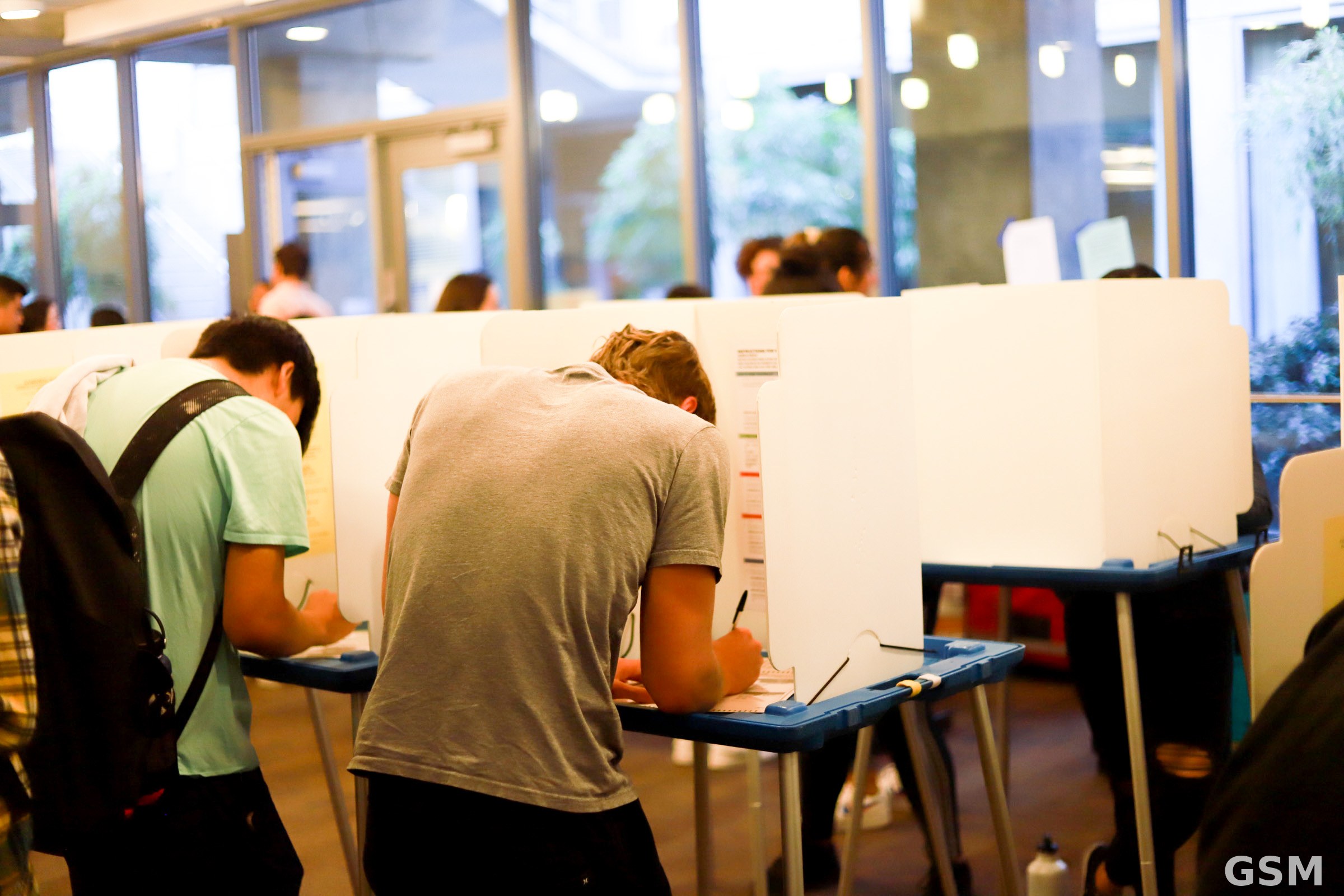
2026年11月3日,美国中期选举投票日。提前投票已逾5750万张,投票站从东岸到西岸依次开放。今夜会有胜负,但本篇不写胜负。本篇写的是另一件事:在投票日走进投票站、以及没有走进投票站的华人,他们心里装着什么。
一、谁是华人选民
先把范围说清楚。本篇所说的华人选民,只有一个标准:美国公民、年满18岁、有选举权。这包括两类人:一类是入籍的一代,一类是在美国出生的二代及以后。非公民不在其中,联邦选举只限公民投票。违法犯罪者也不在这幅画像里,合法选民的范围本身就是依法划定的。
这条线划出来,画像就清楚了。皮尤研究中心的数据:华人是美国亚裔最大的族群,占亚裔成年人口的22%;华人成年人中55%拥有本科及以上学历,高于全美成年人32%的水平;华人成年人中72%出生在美国以外,其中61%的移民已经入籍。移民政策研究所的梳理则说明了这条路的来处:1965年之后,许多华人移民或是作为留学生、或是作为高技能工作签证持有者来到美国,之后取得永久居留权并入籍。留学、工作、创业、留下来、正常工作交税、入籍,这就是大部分华人选民走过的路。
勤奋、好学,在这里不是形容词,是这条路本身。一个人先读书,再工作,再交税,再入籍,最后才拿到选票。选票不是天上掉下来的,是日子一天天过出来的。
二、他们关心什么
2026年亚太裔选民调查(APIAVote与AAPI Data,2026年6月3日至7月27日,访问约2066名登记选民)给出了选民关心的清单。按“非常重要或极其重要”的比例排列:生活成本与通货膨胀90%(其中59%认为极其重要)、医疗82%、就业与失业80%、社会保障与医疗保险80%、教育79%、犯罪与公共安全78%、战争与外交政策78%、种族主义与歧视仇恨犯罪73%、移民68%。
这张清单有一个共同点:每一项都贴着日子。工作、学业、家庭、安全,华人社区平日里最看重的几样东西,在选票上原样出现。教育排在第五位(79%),与这个群体重视教育、重视孩子读书的传统对得上;治安排在第六位(78%),与重视安全的关切对得上;社会保障与医疗保险占80%,与重视将来保障的关切对得上。选票上的议题,就是生活里的议题。
参与度也在上升。同一调查显示,90%的亚太裔登记选民表示计划在本次选举中投票;亚裔的中期选举投票率已从2014年的27%上升到2018年和2022年的40%。华人选民不是旁观者,越来越多的人正在走进投票站。
三、他们想要什么样的治国者
按这张清单,华人选民衡量治国者的标准是具体而实在的:谁能管住生活成本,谁能保住工作与医保,谁能守住社区安全,谁能容得下教育与家庭。这把尺子不认党派标签。百人会2025年华人状况调查指出,华人的党派认同因性别、出生地、在美时间长短而差异显著,即使是自认有党派的人,投票时也不一定按党派划线。华人选民不是铁板一块,他们投票时看的是事情,不是牌子。
这也是本篇不写“华人支持谁”的原因。支持谁是结果,关心什么是原因;原因比结果更值得写。
四、没有走进投票站的年轻人
但也有一群人,没有走进投票站。写稿之前,为了解年轻人真实的想法,随机拨打了华人社区通讯录里的一个电话。这不是民调,也不是正式采访,只是一次了解年轻人想法的电话交流。接电话的是一名24岁的华人青年,匿名。他本来就不想谈政治这个话题。
他的话不多,意思很清楚:谈论政治比较复杂;民主党和共和党都不太喜欢;今年他不去投票。对他来说,最重要的,是自己的学习、工作、将来,以及社会福利保障,都是与他自己切身相关的事。目前他关心的,就是这些。
这段话值得多读一遍。他的关心,学业、工作、保障,与调查里排在前面的议题,是同一批东西。他不是没有关心,他只是不相信政治是通向这些关心的路。投票的人把希望放在选票上,他把希望放在自己的学习和工作上。分歧不在“关心什么”,而在“政治有没有用”。
在美国长大的华人青年中,有的中文已经不太流利,对两党都不喜欢,觉得政治烦恼、复杂,于是干脆不参与。这不是本篇的批评,只是一个事实:合格选民里,有人投票,有人不投票;不投票的那部分,同样是华人选民画像的一部分。
五、文化的根
为什么是这些关心?往深处看,是文化的根。重视教育、重视家庭、重视关系,家庭的关系、群体的关系,重视安全、讲究礼义廉耻,这些不是竞选口号,是华人家庭日常生活里的东西。一个家庭供孩子读书、守着家庭、顾着邻里,日子就是这样一层层垒起来的。
在华人社区的讨论中,常有人提到,传统华人家庭观念里对孝亲与家庭责任的重视,与《圣经》所强调的家庭观念有相通之处。本篇只把这句话记录在这里,不展开论证:它说明的是,华人选民的家庭观念并不是孤岛上的东西,它与美国社会里同样重视家庭的传统,能够彼此听懂。
结尾
今夜,开票结果会一个一个出来。结果无论如何,华人选民的这张清单不会变:工作、学业、家庭、安全。谁来管理这个国家,他们就用这张清单去量。这不是一篇关于胜负的文章,这是一篇关于分量的文章:选票的分量,不在输赢,而在它背后那些具体的日子。
关联:投票站开进大学校园:近5000万年轻选民迎中期选举,亚太裔青年登记增幅达19%
The Election Through Chinese American Eyes: Jobs, Schooling, Family, and Safety Are What Give a Ballot Its Weight
November 3, 2026, is Election Day in the United States. More than 57.5 million early votes have already been cast, and polling places are opening from the East Coast to the West Coast. There will be winners and losers tonight, but this article is not about winning or losing. It is about something else: what the Chinese Americans who walk into polling places today, and those who do not, carry in their minds.
1. Who counts as a Chinese American voter
First, the scope. In this article, a Chinese American voter means one thing only: a U.S. citizen, aged 18 or older, with the right to vote. That covers two groups: the naturalized first generation, and the second generation and beyond born in the United States. Non-citizens are not included; federal elections are limited to citizens. Lawbreakers are not part of this portrait either; the boundaries of the lawful electorate are drawn by law itself.
Once that line is drawn, the portrait comes into focus. According to the Pew Research Center, Chinese Americans are the largest Asian origin group in the United States, making up 22% of the Asian adult population; 55% of Chinese adults hold a bachelor's degree or higher, compared with 32% of all U.S. adults; 72% of Chinese adults were born outside the United States, and 61% of Chinese immigrants have become naturalized citizens. The Migration Policy Institute traces where this road begins: since 1965, many Chinese immigrants arrived either as international students or as high-skilled work visa holders, then obtained permanent residency and naturalized. Studying, working, starting businesses, staying, working regular jobs, paying taxes, naturalizing: that is the road most Chinese American voters have walked.
Diligence and love of learning are not adjectives here; they are the road itself. A person studies first, then works, then pays taxes, then naturalizes, and only then holds a ballot. A ballot does not fall from the sky; it is earned day by day.
2. What they care about
The 2026 AAPI Voter Survey, conducted by APIAVote and AAPI Data from June 3 to July 27, 2026, among about 2,066 registered voters, lists what voters care about. Ranked by the share calling each issue very or extremely important: cost of living and inflation, 90% (59% extremely important); health care, 82%; jobs and unemployment, 80%; Social Security and Medicare, 80%; education, 79%; crime and public safety, 78%; war and foreign policy, 78%; racism, discrimination and hate crimes, 73%; immigration, 68%.
These items share one quality: each one touches daily life. Jobs, schooling, family, safety, the things Chinese communities value most in ordinary days, appear on the ballot unchanged. Education ranks fifth (79%), matching a tradition that prizes schooling and children's studies; public safety ranks sixth (78%), matching a concern for security; Social Security and Medicare at 80% match a concern for future security. The issues on the ballot are the issues of life itself.
Participation is rising too. The same survey found that 90% of registered AAPI voters say they plan to vote in this election, and Asian American midterm turnout has risen from 27% in 2014 to 40% in 2018 and 2022. Chinese American voters are not bystanders; more and more of them are walking into polling places.
3. What kind of leaders they want
Read through that list, and the standard Chinese American voters apply to those who would govern is concrete and practical: who can hold down the cost of living, protect jobs and health coverage, keep neighborhoods safe, and leave room for education and family. That yardstick does not recognize party labels. The Committee of 100's 2025 State of Chinese Americans Survey found that party identification among Chinese Americans varies sharply by gender, birthplace, and length of time in the United States, and that even self-identified partisans do not always vote along party lines. Chinese American voters are not a single bloc; they vote on issues, not on labels.
That is also why this article does not write about whom Chinese Americans support. Support is the result; concern is the cause. The cause is more worth writing about.
4. The young people who do not walk in
But there is also a group that does not walk into polling places. Before writing this article, in an effort to understand what young people really think, a phone number was dialed at random from a Chinese community contact directory. This was not a poll and not a formal interview, only a telephone conversation to learn a young person's thinking. The person who answered was a 24-year-old Chinese young man, anonymous. He did not want to talk about politics in the first place.
He said little, and his meaning was clear: talking about politics is complicated; he does not much like either the Democratic Party or the Republican Party; he will not vote this year. What matters most to him, he said, is his own study, his work, his future, and his social welfare security, all matters closely tied to his own life. For now, those are the things he cares about.
That passage deserves a second reading. His concerns, schooling, work, security, are the same items that top the survey's list. It is not that he has no concerns; it is that he does not believe politics is the road to them. Those who vote place their hopes in the ballot; he places his hopes in his own study and work. The divide is not over what to care about, but over whether politics is of any use.
Among Chinese young people raised in the United States, some no longer speak Chinese fluently, like neither party, find politics tiresome and complicated, and simply opt out. This article offers no criticism of that, only a fact: among eligible voters, some vote and some do not, and those who do not are part of the portrait too.
5. The cultural root
Why these concerns? Look deeper, and the answer is a cultural root. Valuing education, valuing family, valuing relationships, the relationships of family and of community, valuing safety, and honoring propriety, righteousness, integrity, and shame: these are not campaign slogans. They are the stuff of daily life in Chinese families. A family puts its children through school, keeps its household together, looks after its neighbors, and life is built up layer by layer in just that way.
In discussions within Chinese communities, people often note that the emphasis on filial respect and family responsibility in traditional Chinese family values has much in common with the family values emphasized in the Bible. This article records that observation without arguing it further: it suggests that Chinese voters' family values are not something on an isolated island, but something that can be understood by the equally family-valuing traditions of American society.
Ending
Tonight, results will come in one by one. Whatever they are, the list held by Chinese American voters will not change: jobs, schooling, family, safety. Whoever governs this country will be measured against that list. This is not an article about winning or losing. It is an article about weight: the weight of a ballot lies not in victory or defeat, but in the concrete days behind it.
Related: Polling places move onto campus: nearly 50 million young voters face the midterms
来源:2026年亚太裔选民调查
发布:GSM·美国(发布链接)
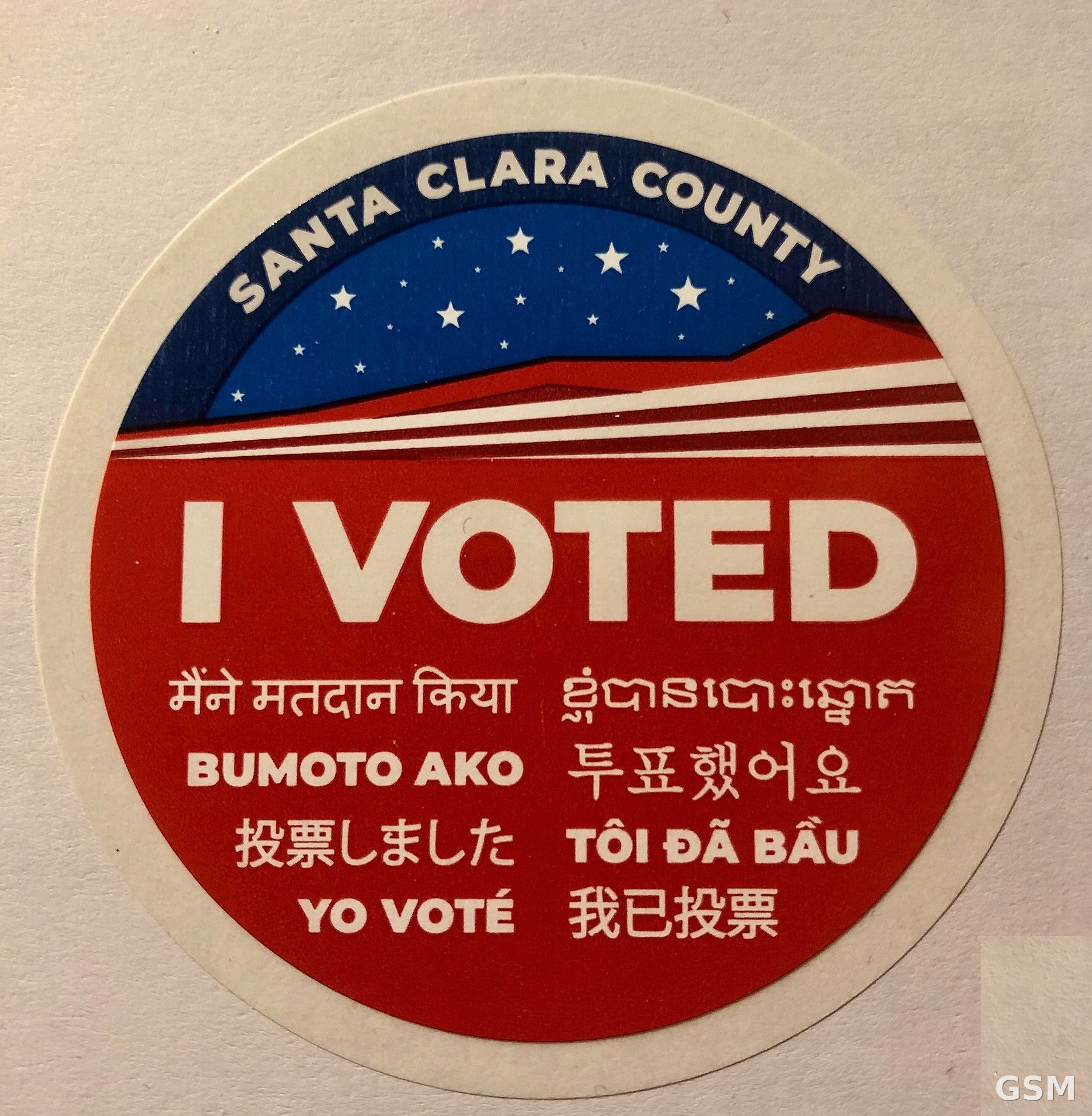
图片来源:加州圣克拉拉县的多语种「我已投票」贴纸,含中文「我已投票」字样(资料图,原图右下角二维码已按本站规范裁除)。圣克拉拉县选民登记处,公共领域,维基共享资源。 / Santa Clara County's multilingual 'I Voted' sticker, including 'I voted' in Chinese (file photo; a QR code in the original corner was removed per GSM policy). Santa Clara County Registrar of Voters, public domain, via Wikimedia Commons.
GSM Global · 本篇英文版 English edition of this story